Inequality is the powder keg but ‘Trump is throwing matches’. Are we headed towards a Second Civil War?

Sepia-toned photo of cannons and civil war soldiers

Unsplash / Rick Lobs

America is a powder keg doused in gasoline, waiting to explode in civil war, and Trump is throwing matches. So runs the thread of a new report arguing that levels of political instability in the United States are at the highest this century, and not even a Biden victory could reverse course towards a Second Civil War.

Two researchers, Peter Turchin and Jack Goldstone, warn that the 2020 election could indeed be a “fire-starter” event. Goldstone said:

The social problems are the gasoline. Trump is throwing the matches.

These are the same two men who forecast that rising inequality would cause instability to peak in the years around 2020. Days before the 2020 election, America is grabbling with a deadly pandemic, civic unrest over racial inequality, and a nation divided like never before.

Trump is not the only problem

Trump at one of his MAGA rallies

Flickr / Gage Skidmore

Many Americans hope that if Biden wins the 2020 election, the political landscape of the nation will be healed. Without Trump sowing seeds of division and stoking hatred and partisanship, Biden can restore the United States of America.

Not so fast, warn the two academics.

Peter Turchin is an evolutionary anthropologist at the University of Connecticut and an expert academic on political instability. According to Turchin, “The tendency is to blame Trump, but I don’t really agree with that.” In an interview with Buzzfeed, he cautioned, “Trump is really not the deep structural cause.”

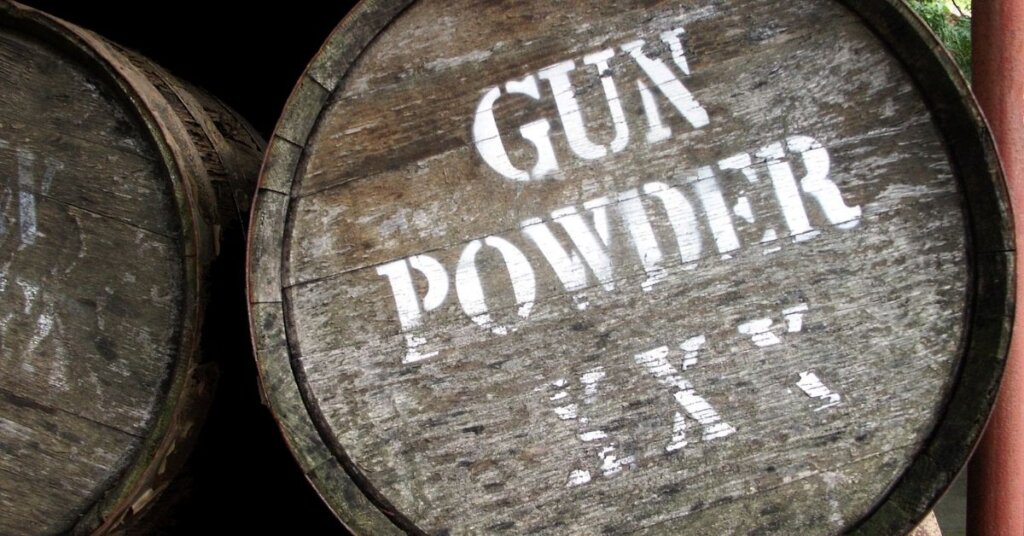
Inequality is the gunpowder within the political keg

A barrel with gun powder written on it

Canva

Jack Goldstone is a sociologist at the George Mason University. He agrees with Turchin, the biggest political threat to America right now is inequality. The two men devised a statistical model to illuminate the trajectory of inequality to political instability.  Wage stagnation and the wealth gap is exacerbated by elites evading taxation. This leads to bitterness and division from the bottom up, shaking the foundations of society.

Turchin went further and developed what he calls the Political Stress Indicator, or PSI. It consolidates degrees of national debt, lack of trust in government, wage stagnation, and urbanization. The PSI of the United States is spiking — just like it did before the Civil War.

‘The election that could break America’

Militarized police response escalates already-tense protest situations

Mike Shaheen / Flickr / CC BY 2.0

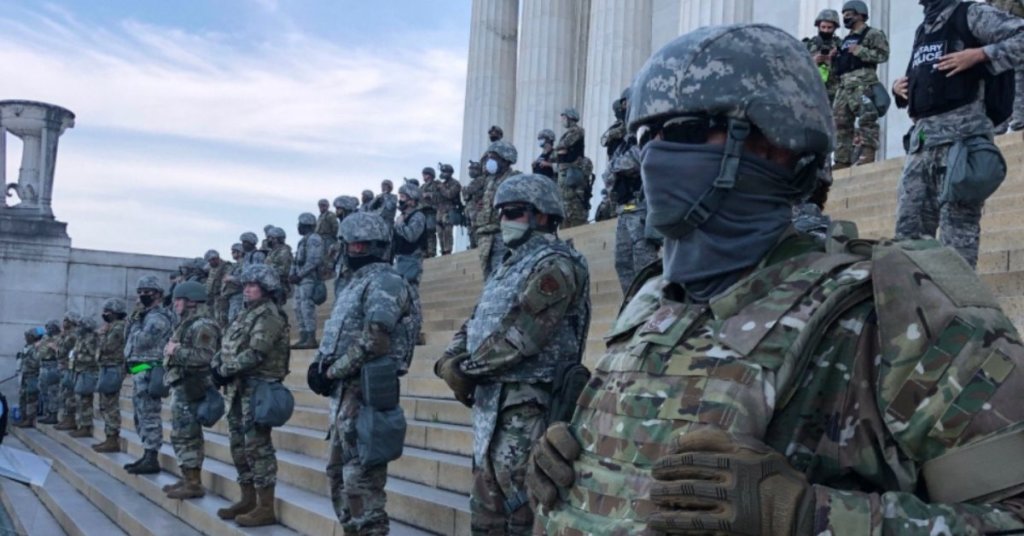
America is lacerated with fault lines. The violent protests over the death of George Floyd were met with heavy-handed authoritarianism that only served to fan the flames of dissent. The COVID-19 pandemic has disproportionately affected Black and lower-income communities, and is heading towards a potentially deadly second wave. The nation-wide lockdowns imposed to contain the virus decimated the casual employment sector and led to spikes in suicide rates, mental health issues, and increased economic inequality.

The 2020 election is a political spark plug just days away. It is expected to attract the highest voter turnout since 1908. The Atlantic magazine recently called it ‘The Election That Could Break America.”

In 1994, Goldstone was hired by the CIA to lead the State Failure Task Force. A think-tank created to identify risk factors that could predict a nation’s descending into chaos. The statistical models that Goldstone helped create predicted civil wars and democratic degeneration with around 80 percent accuracy.

The turbulent twenties

People protesting

Wikimedia

Today, Goldstone fears that with the rising PSI demonstrated by Turchin, America could be headed towards more instability regardless of the election outcome. He told Buzzfeed: “If those trends continue after Trump departs, then the risks and the occurrence of violence will likely continue.”

The Bergguen Institute is a think-tank based in Los Angeles. They published an article co-authored by Goldstone and Turchin. The duo warned that the rising distrust in government across the political spectrum, could lead the country to unprecedented violence.

In short, given the accumulated grievances, anger and distrust fanned for the last two decades, almost any election scenario this fall is likely to lead to popular protests on a scale we have not seen this century.

America is at the precipice of civil conflict

A photograph of National Guard troops blocking access to the Lincoln Memorial.

Screenshot / Twitter

Critics of Goldstone and Turchin argue that the institutional foundations of the United States are too robust for the nation to descend into war. Others point out that the context of the Civil War was unique — with slavery creating an impassable divide. There is also the argument that unlike the broken nations embroiled by civil wars in the developing world, America is economically strong and socially united.

The data do not agree.

Sociologists on the Goldstone-Turchin side, point to the rise of right-wing fanaticism and anti-governmental militia groups as warning signs. In June, the FBI foiled a plan by radical militants to kidnap and potentially kill the Governor of Michigan.

The Fragile States Index is another metric for political stability. According to the FSI, while the United States is still well ahead in the global ranking, it has plummeted within the G7 subgroup (alongside the UK and Italy) and worsened overall in the last decade.

The pandemic that could make America

coronavirus molecule

Unsplash

Across the world, the coronavirus pandemic has heightened inequality and widened the socio-economic rift. Governments and health experts are divided over the best response to contain the virus, and the disputes have filtered down to the individual level seen even in the politicization of masks.

There is hope.

Around the world, 1.7 million people have died of COVID-19 so far, and over 220,000 Americans have lost their lives to the disease — those wounds will never heal. The tragedy of the virus, which cruelly targets the vulnerable and poor communities, can never be undone. Nonetheless, lessons could be learned, and new political landscapes forged in the future.

Scientists hope that future pandemics could be avoided or mitigated through the lessons learned from COVID-19. The shared public health emergency and the resulting global recession could lead to voters looking to a different kind of politician to lead them out of the crisis. There could be a rise in civic federalism, with leadership returning to the community level.

There is still a danger that international relations could deteriorate with countries embroiled in the coronavirus “blame game.” There is also justified concern from civil liberties groups that the freedoms ‘temporarily’ relinquished to governments during national lockdowns may not be returned in full.

America pulled itself back from the brink of political chaos in 1939, with the election of Franklin D. Roosevelt and the New Deal.

Let’s hope that history repeats itself in the right way.

You May Also Like:

*****
Back To Front Page