
Flickr / Democracy Chronicles
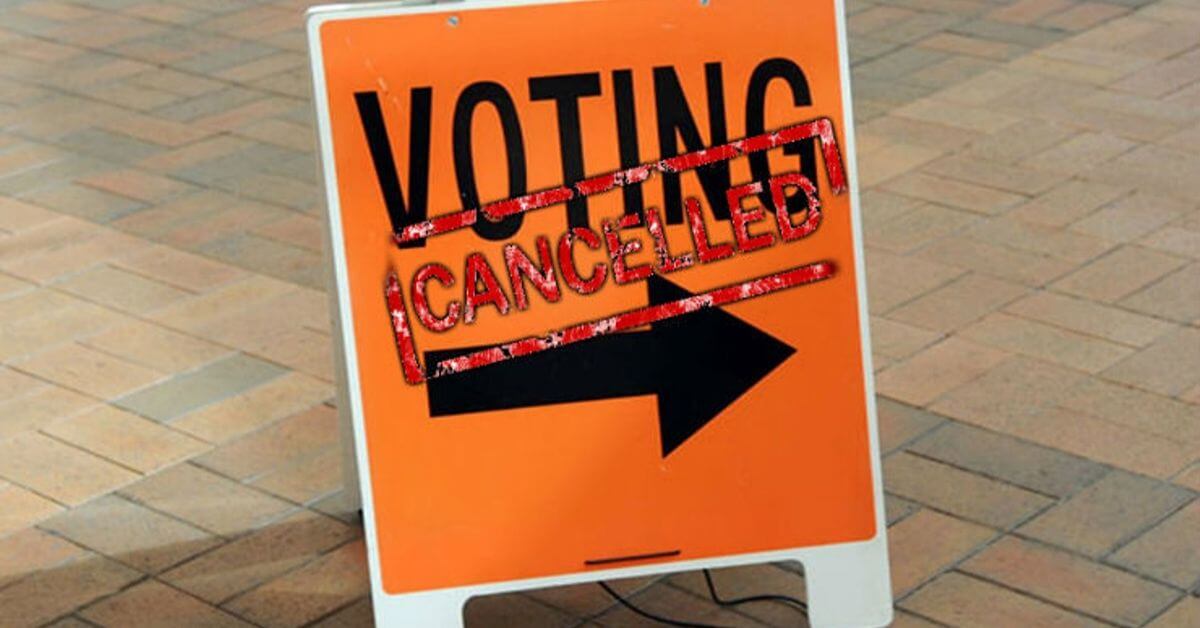
In several states, hundreds of thousands of voters are being marked ‘inactive’ and purged from voter rolls just months before key elections. The move will likely disenfranchise millions of voters across the country and largely affect Democrat-leaning voters.
In Ohio: The state released names of 235,000 voters it planned to purge from voter rolls in September. Around 20,000 were confirmed as active voters in previous Ohio elections, from Franklin County, a Democratic stronghold. This was only revealed after amateur investigative work.
In Wisconsin: A conservative Wisconsin law firm has filed a complaint against the Wisconsin Elections Commission hoping to get 234,000 voters purged for failure to respond to a mailing which updates voter rolls. The commission released a statement that said: “the commission is confident that it is complying with Wisconsin law.” Instead of purging those who don’t respond from the rolls after 30 days, the commission has decided to wait until after the April 2021 election day.
The head of One Wisconsin Institute, Analiese Eicher, told CNN that the filed complaint would have a bigger negative impact on those that vote Democrat.
In Kentucky: Kentucky Democrats just fought to have 175,000 names restored to the rolls after they were prematurely moved to “inactive” earlier this year. Those voters should have remained active until 2022. Kentucky is the home state of Senate Majority Leader Mitch McConnell who is already been accused of failing to secure elections.
Texas: Earlier this year, Texas attempted to purge thousands of voters claiming they weren’t U.S. citizens. The erroneous information led to the resignation of the Texas Secretary of State David Whitley after a civil rights group sued, but not before Trump latched on to the false report of illegal voters:
58,000 non-citizens voted in Texas, with 95,000 non-citizens registered to vote. These numbers are just the tip of the iceberg. All over the country, especially in California, voter fraud is rampant. Must be stopped. Strong voter ID! @foxandfriends
— Donald J. Trump (@realDonaldTrump) January 27, 2019
In addition to the botched voter purge, Texas also leads the country in polling place closures.
“Closing polling places has a cascading effect, leading to long lines at other polling places, transportation hurdles, denial of language assistance and other forms of in-person help, and mass confusion about where eligible voters may cast their ballot.”
The voter purges aren’t anything new, however. Just last year, Georgia disenfranchised 500,000 people in a single day due to their “Use it or Lose it” law. Indiana had its attempt to purge nearly half a million voters blocked by a federal judge last year.
In 2016, 200,000 voters in New York found themselves ineligible when they showed up at the polls to vote in the presidential primary. In fact, the Brennan Center reported that 16 million voters were purged across the U.S. from 2014 to 2016.
The report also states that Florida, New York, Virginia, and North Carolina have had illegal purges since 2013. Plus, four other states have written policies that allow for illegal purges that violate the National Voter Registration Act. Those states are Alabama, Maine, Indiana, and Arizona.
Purging voters tends to disproportionally affect minorities and those lower-income voters something that Supreme Court Justice Sonia Sotomayor pointed out in her dissent of the Ohio voter purge in 2018, stating “Our democracy rests on the ability of all individuals, regardless of race, income or status, to exercise their right to vote.”
Removing eligible voters from the lists, especially when those voters come from minority communities is often seen as an attempt to skew an election for Republicans because historically minority populations tend to vote for Democrats:
“The Democratic Party historically has included more minority voters, who now make up two-fifths of the party. African Americans are the largest minority group in the party (making up 22 percent of Democratic voters in 2016) compared to Hispanics (12 percent) and Asian Americans and voters of other races (7 percent). Minorities continue to make up only a small part of the Republican Party, with Hispanics comprising 6 percent of GOP voters, Asian Americans 4 percent, and blacks 2 percent.”
Trump and other Republicans love to accuse Democrats of voter fraud:
Many mostly Democrat States refused to hand over data from the 2016 Election to the Commission On Voter Fraud. They fought hard that the Commission not see their records or methods because they know that many people are voting illegally. System is rigged, must go to Voter I.D.
— Donald J. Trump (@realDonaldTrump) January 4, 2018
But when it comes to purging voters, gerrymandering, and illegally changing district maps, Republicans are leading the pack.

