

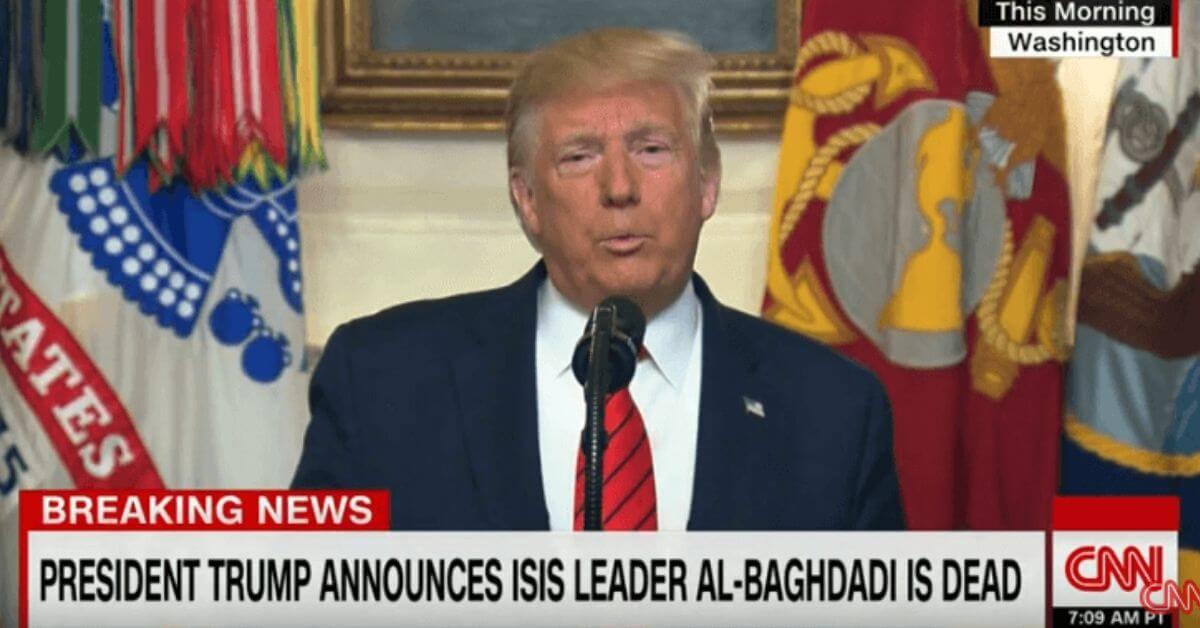
When President Trump revealed details of the operation to take out the ISIS leader al-Baghdadi on Sunday, he may have given terror groups more insight into how the US conducts such operations.
Veterans of previous operations told Politico that the harm of giving out such detail “could be more substantial”.
Trump revealed technological insights:
“These people are very smart, they’re not into cell phones anymore. They’re not — they’re very technically brilliant. You know, they use the internet better than almost anybody in the world, perhaps other than Donald Trump. But they use the internet incredibly well.”
Michael Nagata, a retired Army lieutenant general who was the senior special operations commander during the early stages of the anti-ISIS campaign, said:
“Why mention it? It could contribute to a reverse engineering of our intelligence methods by the adversary, and if there’s any possibility of that, why do it?”
Trump also revealed tactics
The President pointed out the commandos used 8 helicopters that, “blew holes into the side of the building, not wanting to go through the main door because that was booby-trapped.”
Eric Robinson, a former Army officer in intelligence and special operations forces said:
“Aircraft counts and means of conducting a breach are [tactics, techniques and procedures] that special operations forces have developed and learned the hard way. That wasn’t helpful to talk about.”
One former special operations commanders added: “The enemy sees the scene after, they’re on the ground, they see the breaching holes in building — but come on, let them figure it out on their own, don’t tell them.”
Trump revealed commando routes
Trump also told the world that the commandos “took an identical route” back to friendly territory. That also annoyed military tacticians.
Michael Nagata told Politico:
“That’s the most worrisome. The force is vulnerable throughout the operation, but arrival and departure by helicopter are very dangerous. For me, the idea that anyone would talk publicly about how we did the most dangerous part of the operation — the risks far outweigh the storytelling value.”